A side-by-side look at both CRMs
Features |
Tribe CRM |
Pipedrive |
|---|---|---|
| CRM and sales pipeline | ✔ | ✔ |
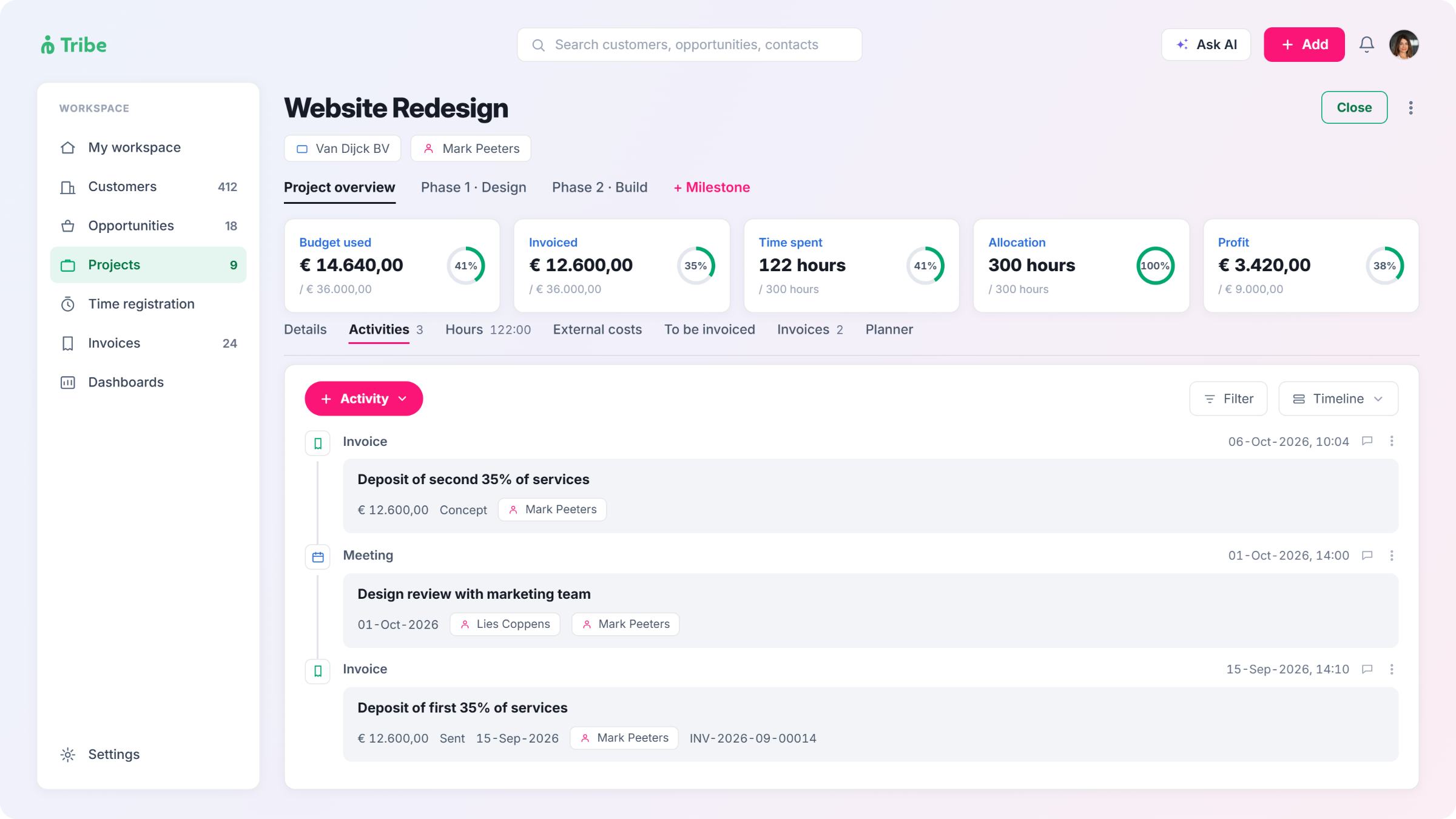
| Native invoicing | ✔ All plans | Third-party integration only¹ |
| Time registration | ✔ All plans | Marketplace app needed |
| Project management | ✔ From Advanced | Paid add-on below Premium² |
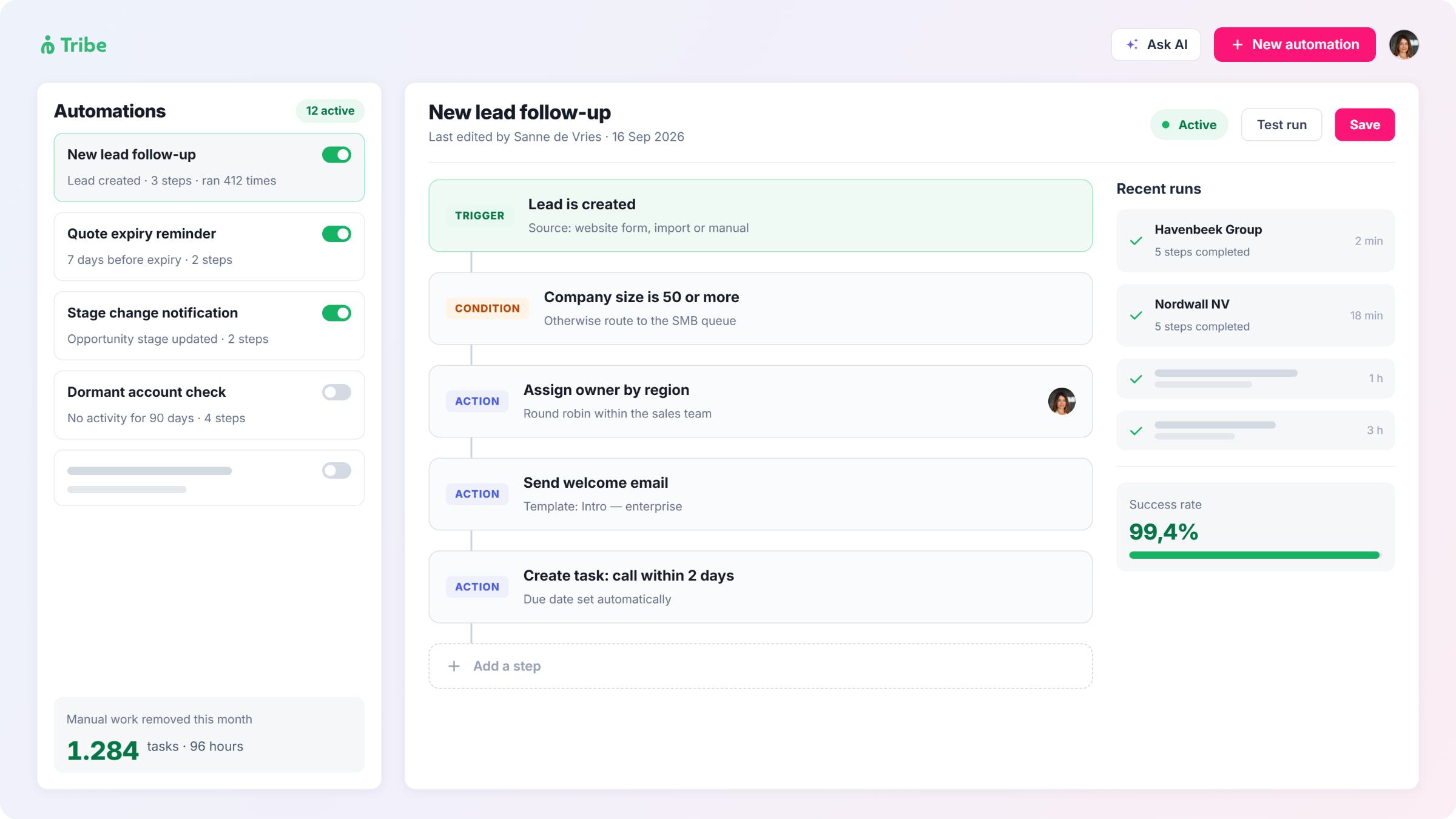
| Workflow automation | ✔ Unlimited from Advanced | ✔ From Growth, capped until Ultimate³ |
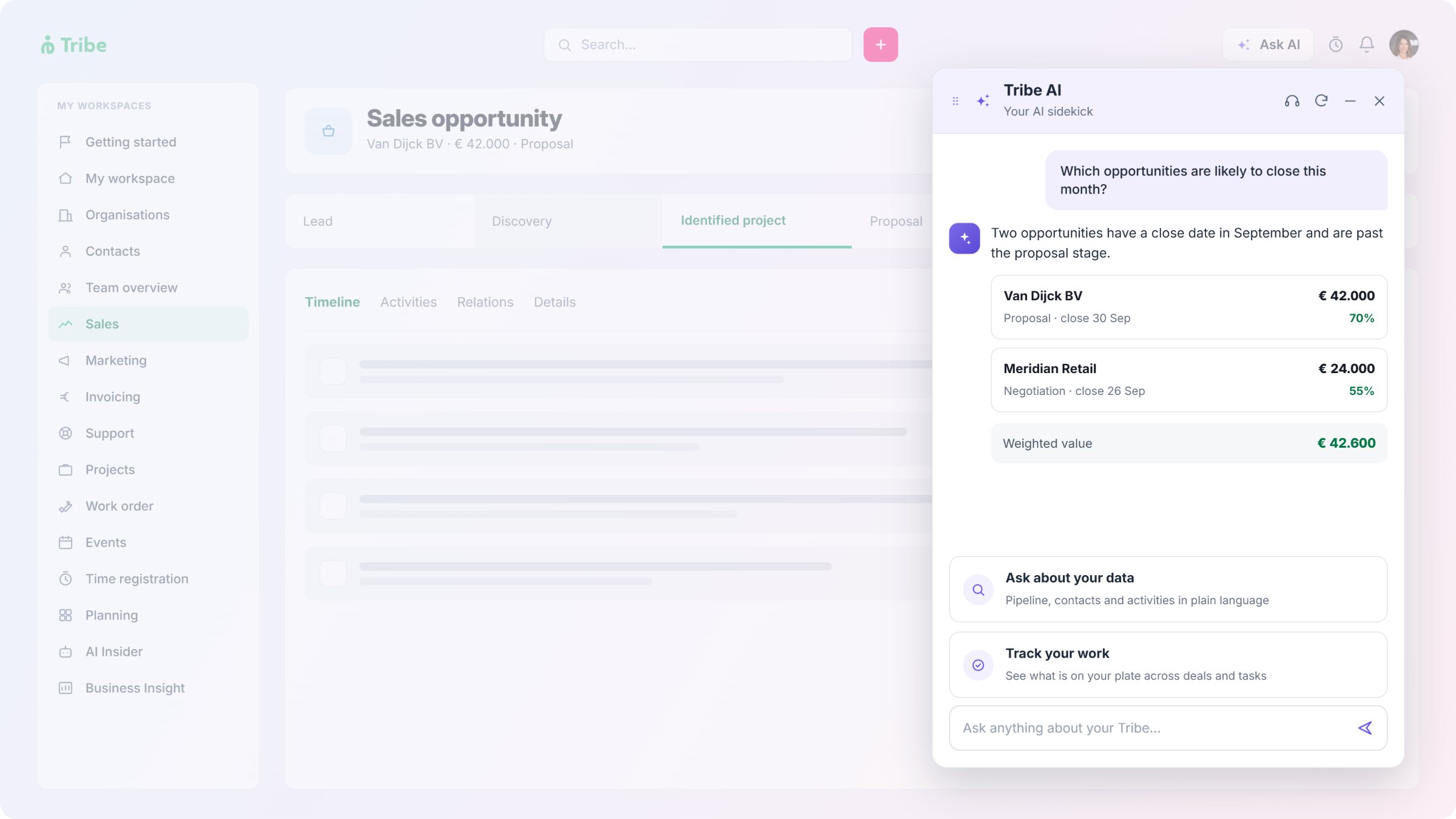
| AI features | ✔ All plans; competitive landscape from Advanced⁴ | ✔ Basic assistant all plans; more from Premium⁴ |
| Phone support | ✔ From Advanced | ✔ From Ultimate |
| What you pay | Seats, plus a couple of narrow add-ons⁵ | Seats, plus paid add-ons for lead gen and documents⁶ |
| Minimum seats | 2 on Essential/Advanced, 5 on Ultimate | None |
| Free plan | None | None |
Start your free trial
As of October 2026: ¹Via a paid Xero or QuickBooks account; no native invoicing. ²Free on the top two tiers; a paid add-on below that. ³Automations start on the second tier; count and branching are capped until the top tier. ⁴Tribe includes its assistant, sentiment analysis and ICP on every plan; AI lead enrichment, lead scoring and competitive landscape need its second plan. Pipedrive's basic Sales Assistant is free too, but its generative AI (summaries, drafting) and predictive deal scoring need its top two tiers. ⁵ White-label branding and a sandbox environment are separate paid add-ons; core sales, billing and marketing tools are included in the plan. ⁶ LeadBooster, Web Visitors and Campaigns are priced per company at every tier; Smart Docs works the same way below Premium but is bundled in free from Premium up. Current rates are on each vendor's site.