Free Trial
Free Trial

Cirqll alternative: how Tribe CRM compares

Compare features and pricing side by side. The difference comes down to whether you need a full business platform, with accounting, manufacturing and inventory alongside CRM, or a CRM built for sales, billing and delivery. Both cover the sales pipeline. They differ in how much else comes with it.

comparison tribe crm and cirqll

A side-by-side look at both CRMs

Features

Tribe CRM

Cirqll

CRM and sales pipeline ✔ ✔
Native invoicing ✔ All plans Not yet; accounting integration in progress¹
Time registration ✔ All plans Not offered
Project management ✔ From Advanced ⚠️ Order and contract tracking only²
AI features ✔ Included Not offered
No-code configuration ✔ All plans ✔ Confirmed
KvK integration ✔ Automatic ongoing sync³ ✔ One-time lookup on creation³
Minimum seats 2 on Essential /Advanced, 5 on Ultimate None
Free trial 14 days 10 days
Start your free trial As of October 2026: ¹Cirqll's own site states an accounting-system integration is currently being built, not yet live. ²Cirqll tracks closed orders and contract terms with renewal alerts; it doesn't have a dedicated project module with milestones or budget tracking. ³Tribe's integration, included from Advanced, keeps company data aligned with ongoing KvK changes automatically. Cirqll's lets you look up and add a new relation from the KvK register; it doesn't keep existing records updated. Current rates are on each vendor's pricing page, since both change from time to time.

Where Tribe differs from Cirqll

Four things to check before you pick either one.

Billing, built in

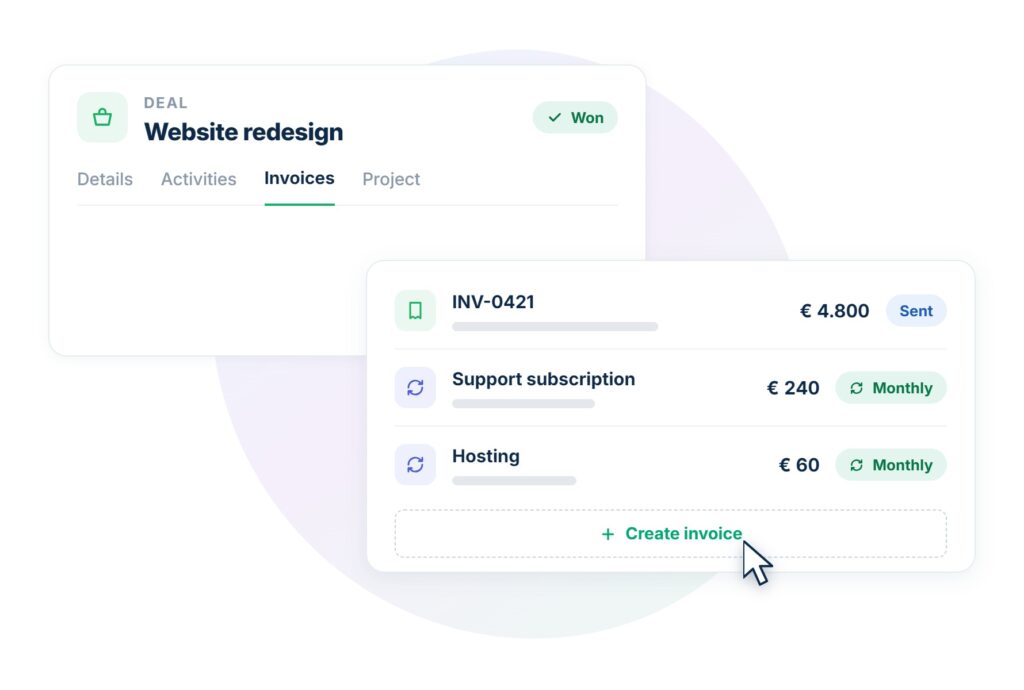
Tribe includes invoicing and recurring billing from its entry plan, on the same record as the deal. Cirqll's own site confirms an accounting-system integration is still being built, not yet available.
cirqll vs tribe billing built-in

Time tracking, included

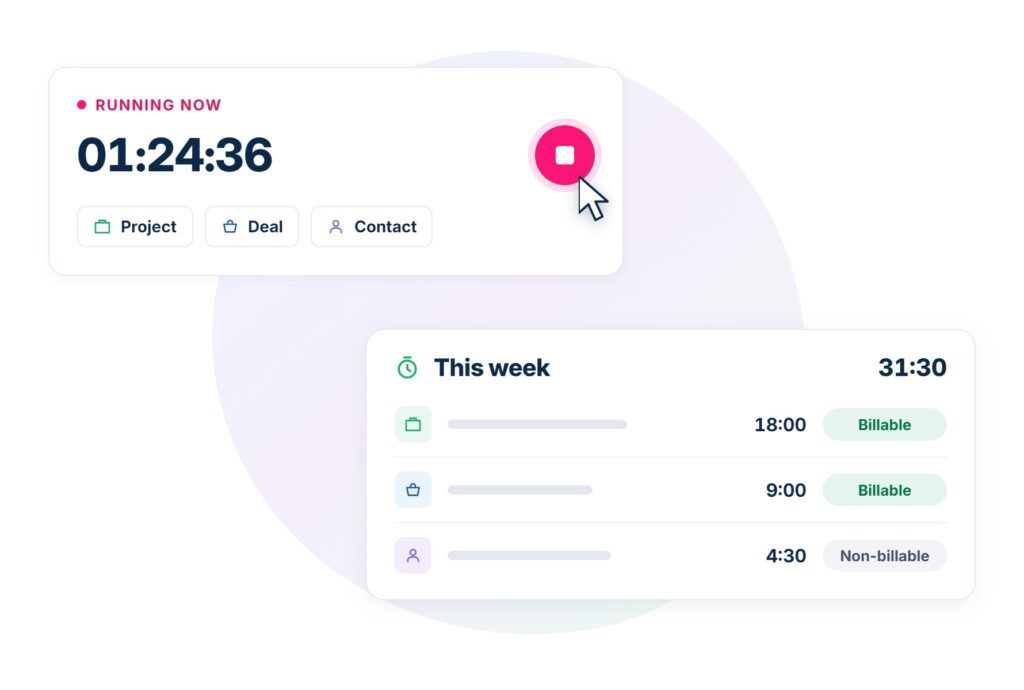
Tribe logs billable and non-billable hours from its entry plan, against a project, a deal, or a contact. Cirqll has no time-tracking capability, or dedicated integration for it either.
cirqll vs tribe crm time tracking included

Delivery tracking, with a budget

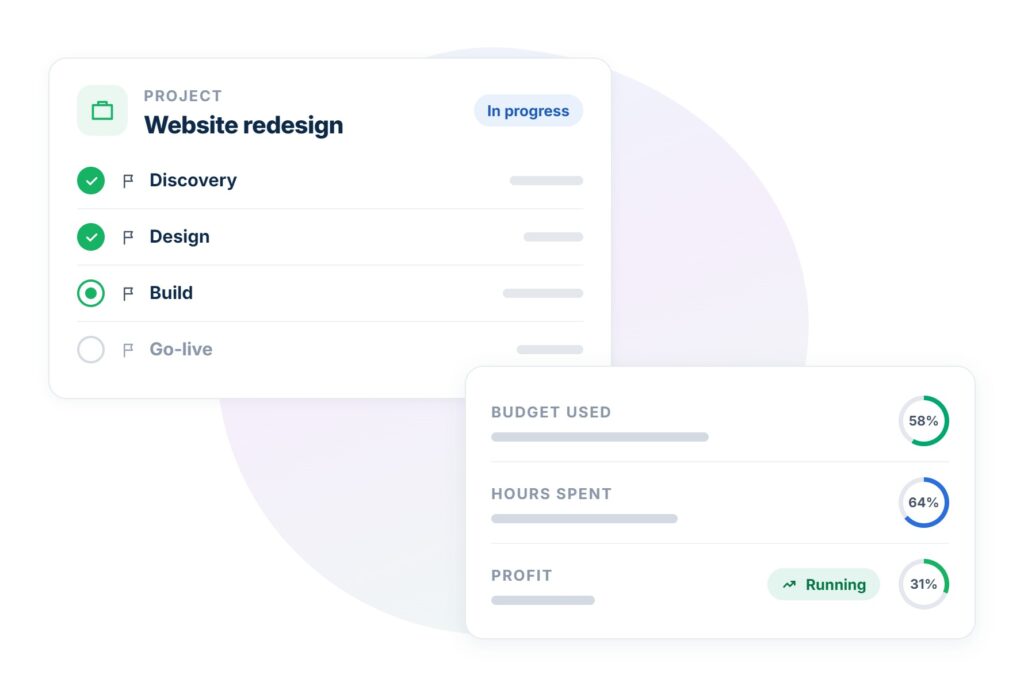
Tribe's project management tracks milestones, budget, hours and a running profit figure on the same record as the deal. Cirqll tracks a closed order's status and delivery date, and a contract's term, without a budget or profit figure attached to either.
cirqll vs tribe tracking with a budget

AI, from day one

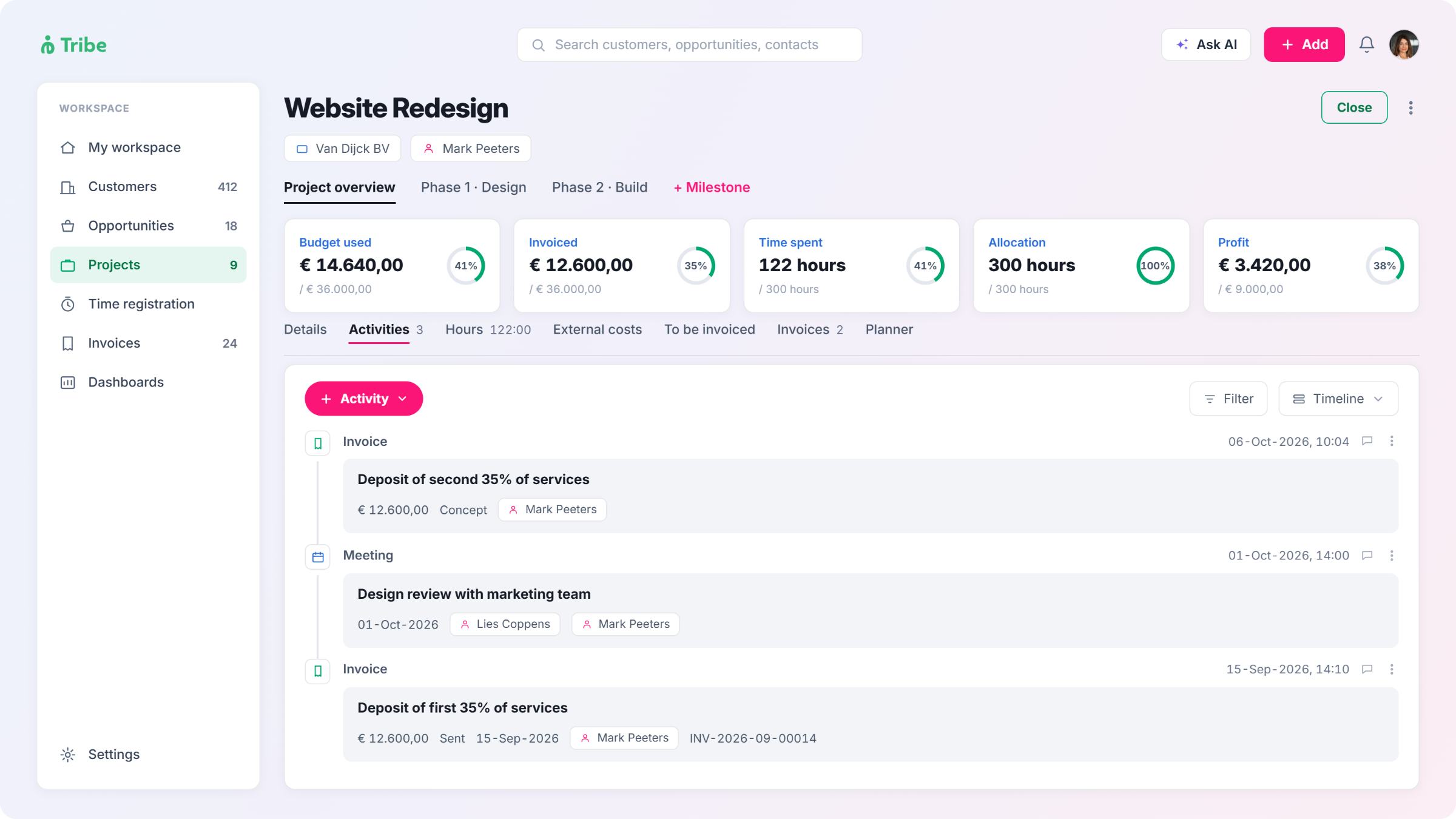
Tribe has a built-in assistant, sentiment analysis, AI-Assisted ICP, AI lead enrichment, and lead scoring. Cirqll has no AI features.
cirqll vs tribe crm ai from day one

Billing, projects and AI, alongside your pipeline

Get a 14-day free trial, four days longer than Cirqll's, no credit card needed.
Start your free trial

Cirqll vs Tribe CRM

Tribe CRM

Cirqll

Started as Dutch-based CRM, part of a 20-year European group Dutch CRM, founded 2021
Built for Sales, billing, time and delivery in one workflow Contact, pipeline, order and contract tracking, deliberately minimal beyond that
Data residency EU, with a dedicated Dutch presence Hengelo, Overijssel, via hosting partner Shock Media
Mobile access Browser-based Native app (iOS and Android)
Free trial Yes, 14 days 10 days
Start your free trial No credit card required.

Tribe and Cirqll serve the same starting need, a CRM for managing customers and a sales pipeline, but they’re built from different premises. Cirqll is a small company founded in 2021, built around a minimal feature set: its own marketing calls this “the art of leaving things out.” Tribe is part of the Efficy Group, a European SaaS group with 20 years of history and a dedicated HQ in Utrecht.

Tribe moves leads through named stages, New, Working, MQL, SQL, then Qualified or Disqualified, with automatic conversion into a linked opportunity built from four parts: details, phases, products, and activities. Lead enrichment and scoring are included from the entry plan, automatic assignment routes a qualified lead to the right rep, and Ask AI checks for duplicates before creating a new record. Cirqll’s “Kansbeheer en Pipeline” view and “Klant-alarm” reminder system cover opportunities and follow-ups, its workflow is built around logging an activity in a few clicks with a note prompt after each call, and it adds a map view for locating customers geographically, an audit log with undo, and tasks and subtasks with deadlines and assignment. Both connect to the Dutch KvK business register for company data, though differently: Tribe’s integration, from its Advanced plan, keeps existing records automatically aligned with ongoing KvK changes, while Cirqll’s is a lookup tool for adding a new relation, which doesn’t update it again afterward. 

Where they diverge is three specific things: invoicing, time registration, and AI, all included from Tribe’s entry plan. Cirqll has none of the three natively: invoicing happens in a connected accounting system, not inside Cirqll itself; hours worked aren’t tracked at all, and no AI feature at all. Cirqll does have a native mobile app on both the App Store and Google Play, while Tribe’s mobile access runs through the browser. 

Invoicing: native in Tribe, an accounting integration in Cirqll

Tribe’s invoicing feature converts a quote directly into an invoice, on the same record as the deal, with e-signature available through a connected provider like ValidSign. Recurring billing and subscriptions work the same way, from the entry plan up.
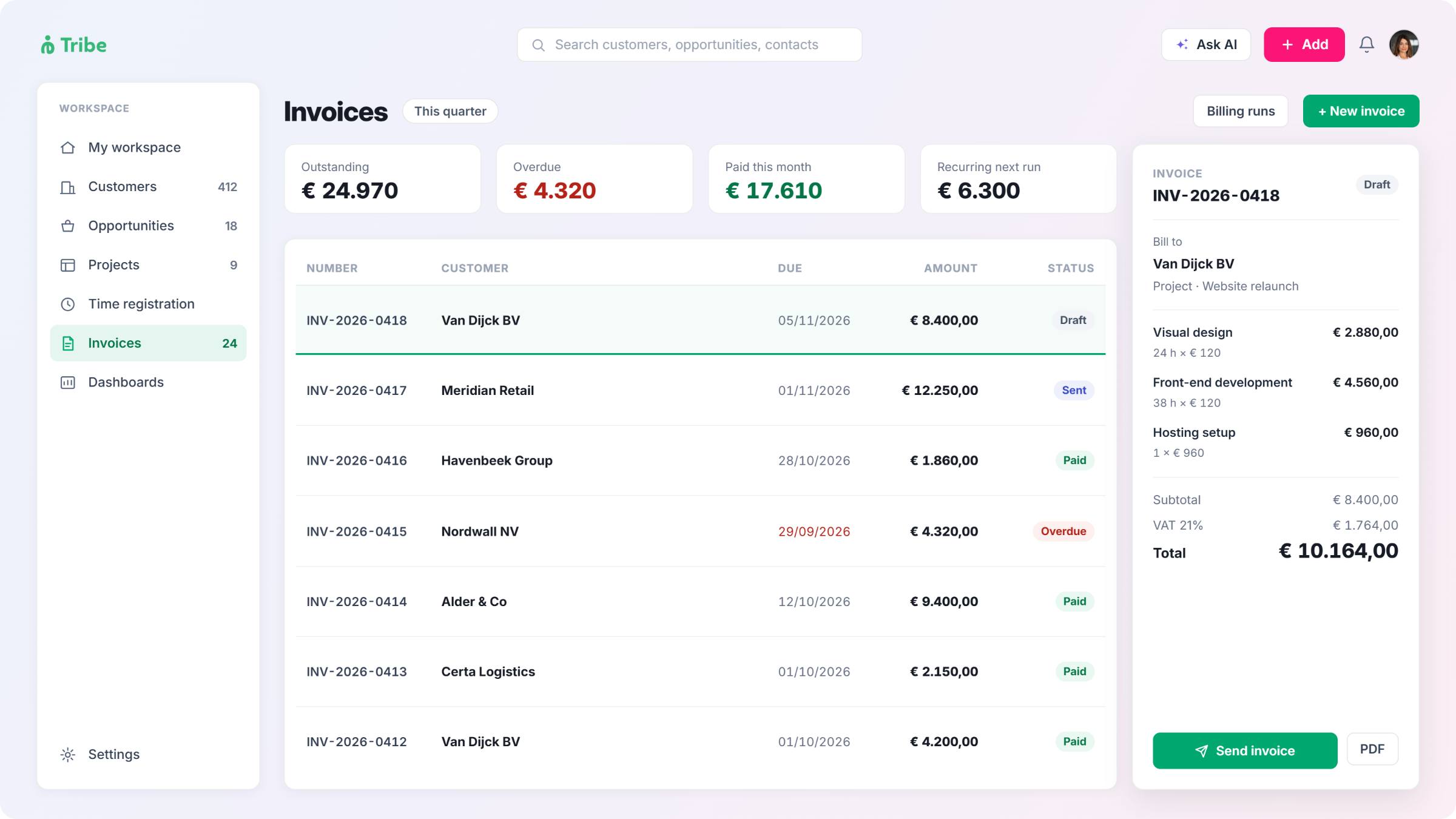
cirqll alternative with invoicing and billing

Cirqll tracks finances differently. You get an overview of financial standing with its “Registratie van opdrachten” (order registration) that tracks which deals have closed and when they’re due for delivery, and its contract management tracks start and end dates with renewal alerts. For invoicing, Cirqll connects to an external accounting system: its own site names a live, two-way integration with Exact Online, where converting an opportunity into an order or contract automatically creates the customer record in Exact, and further integrations exist with AFAS, Ridder iQ, 4PS and Business Central. The invoice is created and sent from that connected system, not from Cirqll.

The difference is that integrations won’t be necessary with Tribe as invoicing works natively from the entry plan, with the integration there as an option rather than the only way to bill a client.


Billing and invoicing in summary

Tribe includes invoicing and recurring billing from its entry plan natively; Cirqll hands this off to an accounting integration instead.

Time tracking: Cirqll has none

Tribe CRM registers time through a timer that starts and stops from the top navigation bar, through manual entry later, or by switching on hour registration directly on a task or appointment. In every case, hours link to a project, opportunity, work order, subscription, or contact, split into billable and non-billable time, with dashboards showing hours per project, customer, month, or year. Logged hours can also be sent straight to billable status, a new invoice, or an existing draft invoice, connecting time tracking directly to the invoicing already covered above.

Cirqll’s complete feature list, covering everything from tasks and subtasks to contract management, has no equivalent anywhere, and no dedicated time-tracking integration is named on its site either, beyond a general Zapier connection. This is a gap for a consultancy, agency, or any business billing by the hour. Without time tracking or native invoicing, Cirqll has no built-in way to connect logged hours to an invoice.

Time registration in summary

Tribe logs hours from its entry plan; Cirqll has no time-tracking capability. 

Projects: milestones and budget, or orders and contracts

Tribe’s project management, from its Advanced plan, opens from a won opportunity and tracks milestones with their own budget and timeline, hours split between billable and non-billable, external costs, and a running profit figure, all on the same record as the deal and the invoice. A work order can be added directly to the project for on-site registration of time and delivered products, and logged hours can be sent straight to billable status, a new invoice, or an existing draft invoice from the project record itself.

cirqll alternative with project management

Cirqll’s “Registratie van opdrachten” shows which orders have closed and their delivery date, viewable per customer and at company level, and its contract management tracks a recurring agreement’s term and renewal date, each with optional attachments. Both are real, useful features, just narrower than a dedicated project module: neither tracks a budget, a profit figure, or hours logged against the work.

Project and delivery tracking in summary

Tribe tracks milestones, budget, and profit on a dedicated project record; Cirqll tracks orders and contracts, without a project-level view.

AI: no feature set on Cirqll to compare against

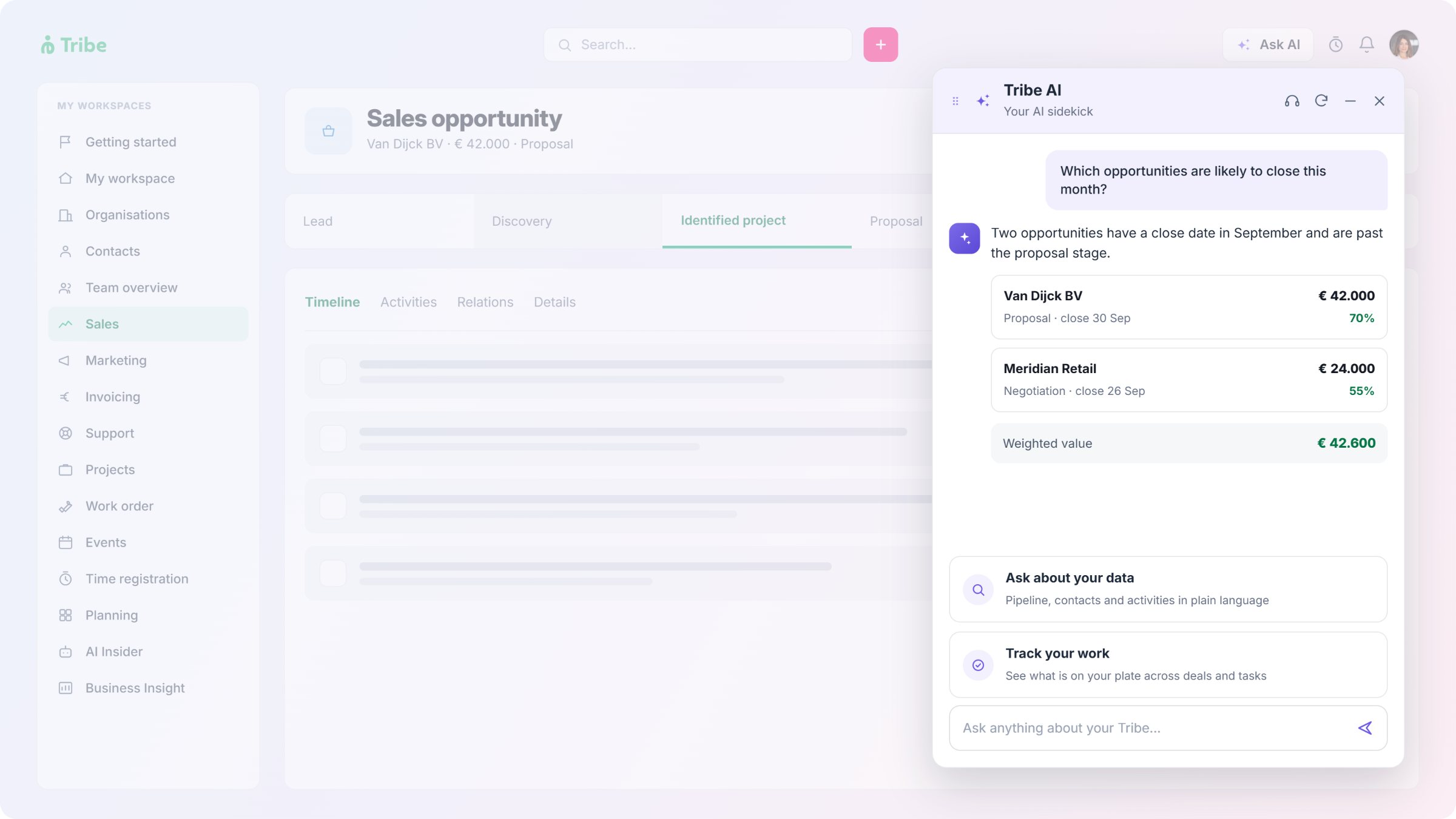
Tribe’s built-in AI assistant, sentiment analysis on emails and AI-Assisted ICP are included from the entry plan. Advanced adds AI lead enrichment, lead scoring, manual fine-tuning on the ICP and Competitive landscape analysis. The data behind it stays EU-resident: Tribe’s CRM application and database sit on EU infrastructure at rest, and each feature sends only the specific records a task needs to a third-party model, mainly Anthropic’s Claude, with Google’s Gemini used for AI-Assisted ICP and Competitive landscape specifically. Nothing from that exchange is stored afterward, none of it trains a model, and any new record an AI feature creates needs a human to approve it first.

cirqll alternative with ai features

Cirqll’s own site, across its features page and full feature list, makes no mention of AI anywhere. This is consistent with its stated philosophy, “no groundbreaking features,” rather than an oversight, but the practical result for a buyer is the same: there’s no AI feature set to compare against Tribe’s.

AI features in summary

Tribe includes AI from its entry plan; Cirqll has none confirmed.

Customisation: no-code on both

On Tribe’s side, this starts with how your team sets up its own product prices and products. Price lists hold your prices for a customer group, a promotion or an order volume, and Tribe applies them to each quote, with products carrying their own settings for partial quantities, who can change a price, and description edits on a single quote, all native from the entry plan. Its second plan adds activity type creation, for defining new activity types rather than working within fixed ones, unlimited custom widgets, and conditional roles and rights. Custom fields scale alongside this: relationship-level on the entry plan, activity-level from the second, and full composability across relationship, activity, and entity levels on the top plan, which also includes custom entities, built with what Tribe calls an exclusive designer, for defining new overview pages, quick-select functionality pages, or customer portal pages without writing code.

Cirqll offers its own real no-code customisation: custom fields at the customer level, custom fields at the contact-person level, custom fields at the financial level (which can be turned into charts), and what it calls “dynamic fields” for adding information as needed. This is a real capability with substance behind it, and it holds up as a fair point of parity rather than a Tribe advantage, even though Tribe’s ceiling goes further once custom entities come into the picture.

Customisation in summary

Both CRM platforms offer no-code customisation.

Cirqll vs Tribe CRM by industry

For consultancies
Billable hours, invoicing, and project delivery sit at the centre of this kind of work. Tribe covers all three from a single client record. Cirqll covers none of the three inside the CRM itself; invoicing runs through a connected accounting system like Exact Online instead, and time tracking isn't available natively or through a named integration.
For accounting firms
A firm billing clients for services needs invoicing and recurring billing as a baseline. Tribe includes both from its entry plan, inside the CRM itself. Cirqll instead syncs deal data to a connected accounting system, such as Exact Online, where the invoicing happens.
For associations and membership organisations
Cirqll has its own dedicated plan for this audience, priced on request, covering contact and relationship management for associations and foundations, with contract and renewal tracking built in. For membership administration alone, it's a reasonable fit. Tribe's advantage shows up once invoicing, time tracking, or project delivery become part of the picture too.
For government and public sector teams
Cirqll's data is hosted in a managed cloud environment in Hengelo, Overijssel, run jointly with hosting partner Shock Media. Tribe's data stays within the EU and is certified to ISO/IEC 27001:2022, ISO/IEC 27701, GDPR, and NIS2.
Industry Tribe CRM fits when Cirqll fits when

Consultancies

Accounting firms

Associations and membership orgs

Government and public sector

Billing, time tracking and delivery sit alongside sales

Invoicing and recurring billing inside the CRM are required

Dues, renewals, delivery and billing need to work together

EU-wide compliance and a dedicated Dutch presence matter

The need is contact, pipeline, order and contract tracking only

Billing through a connected accounting system like Exact Online is already the workflow

Contact and relationship tracking alone is enough

Data hosted specifically in the Netherlands, via a named hosting partner, is the priority

Frequently asked questions

Yes, for a business that needs invoicing, time tracking, project delivery, or AI alongside its pipeline. For a business that only needs contact, pipeline, order and contract tracking, Cirqll’s narrower, simpler product may be enough.

No, Cirqll offers a financial dashboard and order tracking, and connects to accounting systems like Exact Online, AFAS, Ridder iQ, 4PS and Business Central, syncing customer and deal data automatically. The invoice is created in that connected system, not in Cirqll.

Yes, from its entry plan, with recurring billing included on the same record as the deal, and e-signature available through a connected provider like ValidSign or DocuSign.

No. Cirqll’s full feature list has no time-tracking capability, and no dedicated time-tracking integration is named on its site either, beyond a general Zapier connection.

Yes, from its entry plan, through an in-app timer, manual entry, or directly from a task.

Not a dedicated module. Cirqll tracks closed orders and contract terms with renewal alerts, which covers status and delivery dates but not budgets or profit.

Yes, from its Advanced plan, tracking milestones, budget, hours, and a running profit figure on the same record as the deal.

No. Cirqll’s site makes no mention of AI features anywhere.

Yes. Its built-in assistant, sentiment analysis on emails and AI-Assisted ICP are included on every plan. AI lead enrichment, lead scoring and a competitive landscape summary, built from the account’s own data, need its second plan.

Yes. Cirqll offers custom fields at the customer, contact, and financial levels, plus dynamic fields for adding information as needed.

Yes, at every tier, through price lists for your own product prices, product settings, and custom fields that scale in depth by plan.

In Hengelo, Overijssel, confirmed on Cirqll’s own FAQ page. Tribe’s data stays within the EU, with ISO/IEC 27001:2022, ISO/IEC 27701, GDPR, and NIS2 certification confirmed on Tribe’s own pricing page.